4 Weeks Free Access (cancel anytime)
Buyer's guideAthlete management systemBuyer's guideComparison

Teamworks vs Kitman Labs vs Catapult AMS (2026)

Teamworks vs Kitman Labs vs Catapult AMS: one of the three was discontinued in 2024. See what's left, what each is built around, and which fits your club.

Published

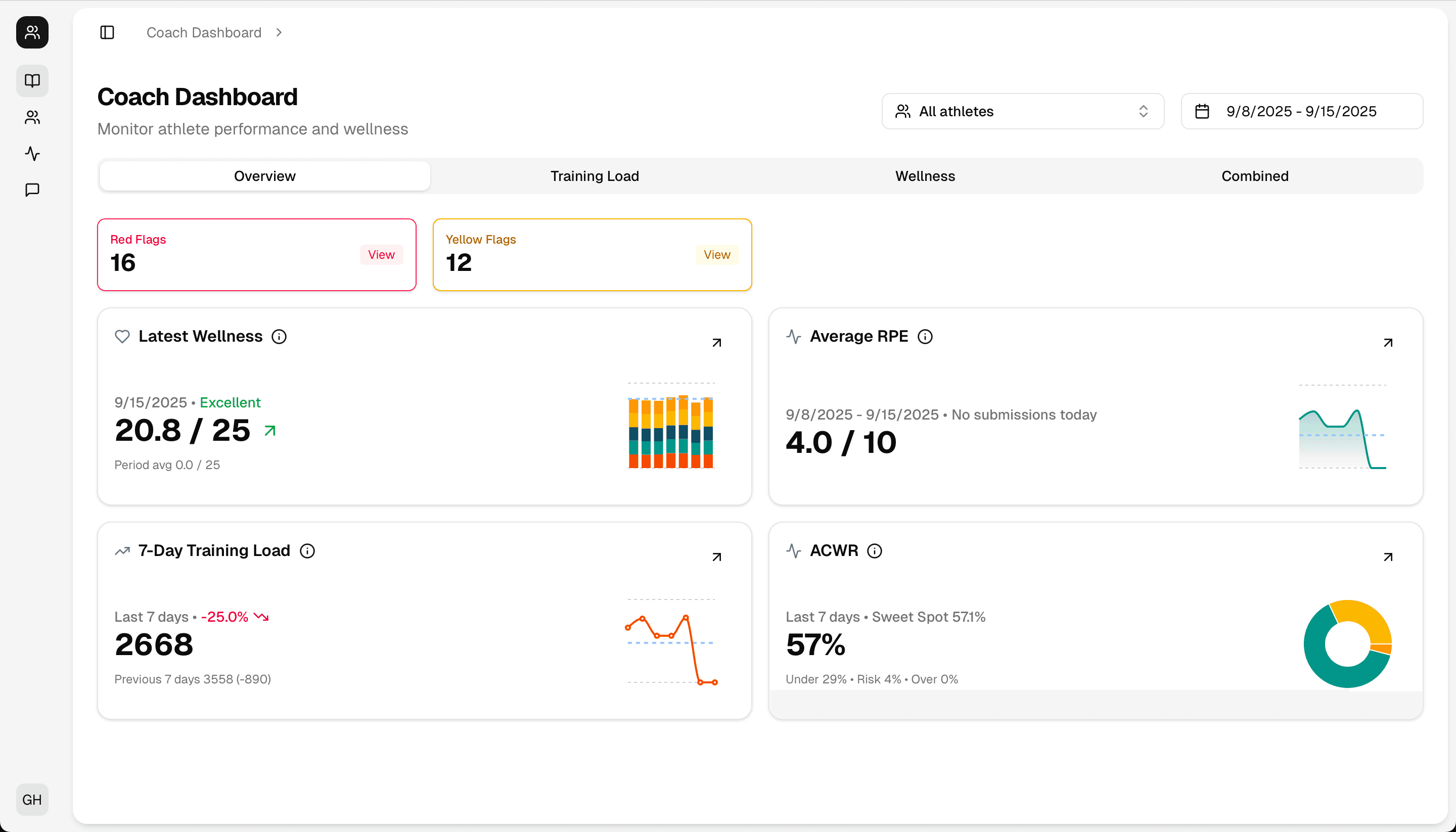
Athlete management dashboard showing squad training load and readiness across a season.

Quick answer

Teamworks, Kitman Labs and Catapult AMS are shortlisted together constantly, but as of August 2026 it isn’t a three-way choice. Catapult AMS reached end of life on 31 March 2024 and is no longer supported. That leaves two live platforms, built around different things: Teamworks is organised around athlete operations, and Kitman Labs around unifying performance and medical data. Both are enterprise products sold by quote, with no public pricing. If your club doesn’t have a performance department to run one, none of the three is the right starting point.

The correction

Is Catapult AMS still available?

No. It was retired on 31 March 2024, which means one of the three names on most shortlists is a product you can no longer buy.

Catapult’s own end-of-life notice puts the date at 31 March 2024 and states that the data held inside the application will be deleted in due course. The notice names no replacement product. It tells affected customers to speak to their Customer Success contact.
Catapult’s current product pages back this up. The athlete monitoring line is Vector Pro, Vector Core and Catapult One, alongside video analysis and scouting tools. There is no AMS anywhere in it.
Verified 20 August 2026 against Catapult’s end-of-life notice at catapult.com/ams-eol, and cross-checked against the product and athlete monitoring pages on catapult.com, neither of which lists an AMS. Vendors do bring products back, so treat this as accurate on the date it was checked rather than permanently settled.
This matters more than a footnote usually would, because the comparison pages that rank for this shortlist are automated directory listings. They still describe Catapult AMS in the present tense, with feature grids and review scores, two and a half years after it was switched off. If you built a shortlist from one of those pages, it has a hole in it.

Live platform one

What Teamworks AMS actually is

An athlete management system inside a much larger operations suite, aimed at organisations that need a whole department coordinated, not just a squad monitored.

Teamworks calls itself the Operating System for Sports, and the AMS is one product among many. The wider suite covers scheduling and communication, compliance, academics, recruiting and player personnel, nutrition, strength and conditioning, a sports EMR, inventory, and an analytics arm built from its Zelus acquisition. The AMS itself pulls load, testing, nutrition and survey data together to track athlete availability and readiness, and to support individual development plans.
The company reports 7,000+ teams, 520+ collegiate athletic departments, 330 professional organisations and 65 leagues and governing bodies, and its AMS page advertises 100+ integrations with wearables and performance tech, an API, and an R analytics package. Those are Teamworks’ own published figures rather than independently audited ones.
One naming point worth knowing before you sit through a demo. The technology underneath the AMS is Smartabase, which Teamworks acquired with Fusion Sport in January 2023. The current AMS page doesn’t use that name, but plenty of reviews and directory entries still do, so you’ll see both.

Who it fits

Organisations where the hard problem is coordination. A US collegiate athletic department running dozens of teams, or a professional club where performance, medical, academic and compliance staff all need to see the same athlete record.

Live platform two

What Kitman Labs iP actually is

A data unification platform that positions itself deliberately above the AMS category, with medical records and injury modelling at its centre.

Kitman Labs sells the iP Intelligence Platform. Its own copy puts distance between the product and the category: the medical module is described as more than an EMR, and the performance module as beyond an AMS. That’s positioning, but it tells you what the platform is organised around. The job it’s built for is pulling performance, medical and operations data out of separate systems and into one record.
The modules cover reporting and visualisation, day-to-day operations and administration, integrations, and a data integration API, plus specialised products for performance medicine, performance optimisation, coaching and development, league operations, and concussion management through C3Logix. Customers named on the site span professional teams, leagues and governing bodies, collegiate programmes, MLS, and defence organisations.
Directory pages often quote a specific integration count for Kitman. We couldn’t find that number stated anywhere on Kitman’s own site, so we’ve left it out rather than repeat it. Ask in the demo, and ask specifically about the systems you already run.

Who it fits

Organisations with real data fragmentation and clinical staff. If you have physios writing notes in one system, sports scientists exporting from another, and nobody able to answer whether a hamstring history correlates with the last block of high speed running, this is the shape of problem Kitman is built for.
If Kitman came onto your shortlist mainly on price grounds rather than data-fragmentation grounds, our guide to Kitman Labs alternatives for clubs on a budget covers what the alternatives lists get wrong.

The migration question

What replaced Catapult AMS

Nothing did, directly. Catapult narrowed back to what it started as, which is hardware-captured external load.

Catapult didn’t announce a successor AMS. Its current line is built around wearables: Vector Pro and Vector Core capture GPS, local positioning and heart rate, Perch handles weight-room velocity, and Catapult One is aimed at high school and youth. The video and scouting products are software-only, but they answer a different question entirely.
That leaves former Catapult AMS customers with a split. The external load data still comes off the hardware. The athlete record, the wellness check-ins, the availability tracking and the reporting that used to sit in the AMS have to live somewhere else now. Some clubs moved up to Teamworks or Kitman. Others went the other way and paired their existing hardware with a lighter platform that imports the exports, which is worth understanding alongside the difference between internal and external load.
If you’re in that position, the practical question is whether your new system reads your existing exports. Fractall handles Catapult CSV import directly, so the hardware you already own keeps producing data you can use without a re-purchase.

The number nobody publishes

What Teamworks, Kitman Labs and Catapult cost

All three sell by quote. None of them publishes a price, and that shapes who can realistically buy them.

We checked all three vendor sites in August 2026. There is no public pricing on any of them. Catapult links to a pricing page that doesn’t show rates, and Teamworks and Kitman route you to a contact form. Expect a discovery call, a scoped proposal, and annual billing.
Quote-only pricing isn’t a scandal. It reflects products that are genuinely configured per organisation, and enterprise software has worked this way for decades. But it has a practical consequence: you can’t build a budget case before you’ve spent several weeks in a sales process. For a club that needs board approval on a number first, that ordering is backwards. Our athlete monitoring cost breakdown sets out what the different tiers actually run to.

What to ask for in the first call

Ask for the all-in first-year figure, not the licence fee. Implementation, data migration, training, and any per-seat or per-team scaling are where enterprise quotes move most, and they’re rarely in the headline number.

Side by side

Teamworks vs Kitman Labs vs Catapult AMS at a glance

Compared on what each system is organised around, which decides the purchase more reliably than a feature checklist does.

SystemBuilt aroundStatus and pricing
Teamworks AMSAthlete operations: scheduling, compliance, communication, academics, with AMS as one module of manyLive. Quote-only, no public pricing
Kitman Labs iPData unification, with performance medicine and injury modelling at the centreLive. Quote-only, no public pricing
Catapult AMSHardware-captured external load, via Catapult's own wearablesDiscontinued 31 March 2024. Vector and Catapult One remain, quote-only
Feature grids make these three look like variants of one product because they all tick load, wellness, availability and reporting. They aren’t. The difference that shows up eighteen months into a contract is what the system was designed to be good at, and what it merely accommodates.

Right-sizing

Do you actually need one of these systems?

All three assume an organisation with dedicated performance and medical staff. Plenty of clubs shortlist them without checking whether that assumption holds.

There’s a version of this decision that never gets made explicitly. A club hears these names from a peer at a bigger organisation, books three demos, and then discovers at proposal stage that the pricing and the implementation assume staff the club doesn’t have. The platforms aren’t at fault. They’re doing exactly what they were built to do, for the buyers they were built for.

Works well for

  • You run multiple teams with separate performance and medical staff who need one shared athlete record
  • You have clinical data under health-data rules that has to be handled properly
  • You have a procurement process and a multi-year budget line for software
  • Someone on staff will own the system, configure it, and keep data quality up

Watch out for

  • One S&C coach covering the whole club, with no analyst and no dedicated admin
  • You need a price before you can get approval to start a conversation
  • Your actual problem is training load, wellness and availability in one place, not department-wide coordination
  • Your current system is a spreadsheet, and the gap to an enterprise platform is several steps too far
If the right-hand column describes your club, the shortlist is oversized rather than wrong. The job you’re trying to do is real, it’s just smaller than these three platforms assume. Our guide to athlete monitoring software for small clubs covers what that tier looks like and what to expect to pay for it.
Fractall sits in that tier. The fragmentation problem Kitman solves at enterprise scale has a smaller cousin at club level, which is simply getting load, wellness and availability into one athlete record instead of three spreadsheets. No hardware, and it publishes its pricing so you can take a number to a board before you take a demo.

Monitor your squad without a performance department

Training load, wellness and availability in one place. No hardware, published pricing, and a free trial you can run with your own squad.

Start a free trial

FAQs

Questions buyers ask about these three systems

Short answers for anyone partway through an AMS shortlist.

Is Catapult AMS still available?

No. Catapult AMS reached end of life on 31 March 2024. Catapult’s notice says the application is no longer supported and that the data inside it will be deleted in due course. Catapult still sells athlete monitoring, but through its Vector hardware and Catapult One rather than a standalone AMS.

Which is better, Teamworks or Kitman Labs?

They’re built around different things, so neither wins outright. Teamworks is organised around athlete operations: scheduling, compliance, communication, nutrition and academics, with the AMS as one product inside a wider suite. Kitman Labs is organised around unifying data, with medical records and injury modelling at the centre. Pick Teamworks if your problem is coordination across a department. Pick Kitman if your problem is that your performance and medical data live in separate systems.

How much does an athlete management system cost?

None of these three publish a price. Teamworks, Kitman Labs and Catapult all sell by quote, which means a sales conversation before you see a number. Budget for the software plus implementation, and for the staff time to run it. If you need a price before you can get internal approval, that quote-only model is itself a reason to look at a different tier of tool.

What is the difference between an AMS and an EMR?

An AMS centralises athlete performance data: training load, wellness, testing, availability. An EMR is a medical record system holding clinical notes, diagnoses and treatment history under health-data rules. Enterprise platforms increasingly bundle both, which is why Kitman Labs describes its medical product as more than an EMR and its performance product as beyond an AMS.

Is Teamworks AMS the same as Smartabase?

Smartabase is the athlete management technology Teamworks acquired when it bought Fusion Sport in January 2023, and it sits underneath the Teamworks AMS product. The current Teamworks AMS page doesn’t use the Smartabase name, so you’ll still meet both names in older reviews and directory listings.

Do I need one of these systems for a small club?

Probably not. All three are sold to organisations with dedicated performance and medical staff, procurement processes and multi-year budgets. A club with one S&C coach and forty athletes usually needs training load, wellness and availability in one place, which is a much smaller problem than any of these platforms is designed to solve.

Related guides