

Why Athlete Compliance Breaks Wellness Monitoring
Poor compliance silently kills sRPE and wellness data. Learn why athletes stop submitting and how reducing friction transforms monitoring.
Updated first published
Quick answer
Above 80% is healthy, below 60% the trend is unreadable
Quick answer
Compliance drop-off
Week one looks good; week three reveals the real workflow
Most monitoring systems do not fail because athletes lack motivation. They fail because the daily submission habit has too much friction and too little visible value.
Week 1
Week 3
Friction points
Four experience problems quietly kill compliance
Before changing metrics or adding incentives, inspect the athlete experience on a phone.
| Friction point | Impact | Fix |
|---|---|---|
| Browser-based access | Extra links, logins, and mobile formatting issues create dropout. | Use a native mobile flow with a saved session where possible. |
| Poor notification timing | Athletes miss the check-in or coaches chase them individually. | Use predictable reminders tied to training and wellness routines. |
| Slow interface | A daily form that feels long becomes easy to ignore. | Keep the flow fast, focused, and mobile-native. |
| No athlete feedback | Players do not see why submitting helps them. | Show readiness trends and explain how data informs training. |
Practical examples
The same questions perform differently in different experiences
Compliance often changes when the submission route changes, even if the monitoring questions stay the same.
Shared form, fading response rate
A youth football squad starts with strong Google Form compliance, then drops sharply as links are forgotten and the process feels disconnected from training.
This week's fix
Improve compliance by removing steps and increasing value
You can usually lift compliance before changing tools by making the current process shorter, better timed, and more visible.
- 1
Audit the mobile journey
Open the form on a phone and count every tap from reminder to submission.
- 2
Pick one notification time
Use a predictable trigger, such as after training for sRPE or before training for wellness.
- 3
Shorten the questionnaire
Five useful questions completed by most athletes beat twelve questions completed by a minority.
- 4
Close the loop
Share team trends and athlete-facing insights so players see the benefit.
- 5
Review compliance weekly
Act before response rates collapse and the dashboard becomes unreliable.
Daily wellness core
- Sleep quality.
- Fatigue.
- Muscle soreness.
- Mood or motivation.
- Stress or readiness.
Fractall workflow
Use mobile collection to reduce the daily compliance burden
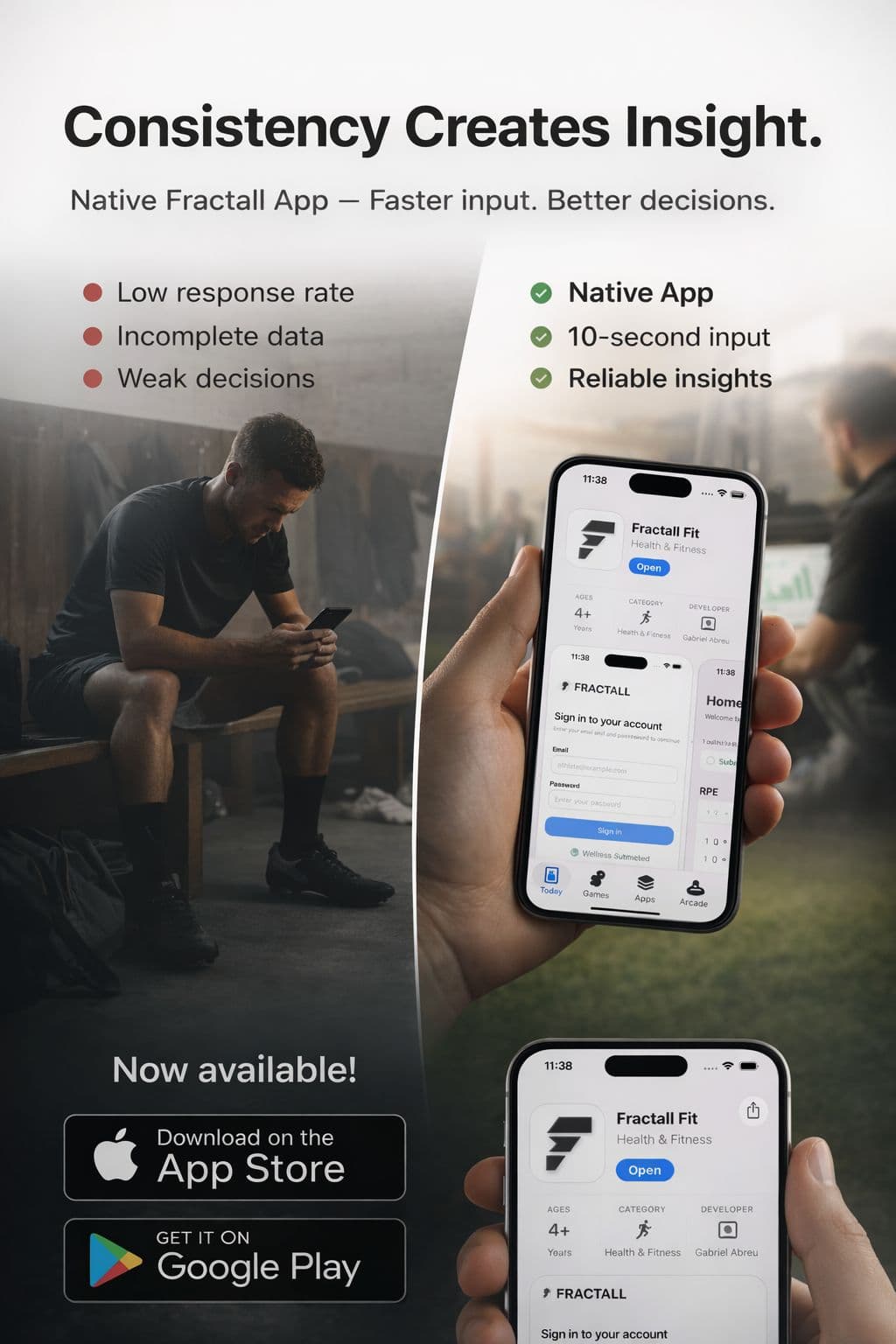
Fractall's athlete app supports daily wellness check-ins and post-session sRPE collection, with coaches reviewing trends in the web dashboard.
From reminder to coaching context
Athletes submit wellness and sRPE through the mobile app.
Coaches review wellness, load, ACWR, monotony, strain, and submission trends.
Staff use the data in planning so athletes see that the habit matters.
Reduce monitoring friction
Use Fractall to collect athlete wellness and sRPE data through mobile flows built around daily training routines.
FAQs
Compliance and wellness monitoring questions
Short answers for coaches trying to keep daily monitoring alive after the first few weeks.
Why do athletes stop submitting?
What compliance rate is good?
Does the channel matter?
Can we improve without changing tools?
Coach checklist
- Audit the current mobile submission path.
- Reduce wellness questions to a focused set.
- Use one consistent notification time.
- Avoid repeated login friction where possible.
- Share team trends weekly.
- Give athletes visibility into why their data matters.
- Review compliance before it drops below 70%.
Related guides
Winter Break Training Plan for Football S&C Coaches
Winter break training plan for football: what two weeks off costs, the minimum to prescribe at home, and how to log it so January ACWR stays honest.
Two Games a Week: What Wellness Data Shows Before Match 2
Fractall data on football teams playing two games a week: on match morning, fatigue sits less than half as far above normal. How to read wellness between games.
ChatGPT and Claude for Strength and Conditioning Coaches
What an S&C coach can ask ChatGPT or Claude about squad load, wellness and injuries, and the privacy settings to change before any athlete data goes in.