

Microcycle Comparison: 5 Load Metrics Coaches Need
Learn how microcycle comparison using ACWR, monotony, strain, daily load, and sRPE helps coaches identify load patterns before the next session.
Updated first published
Quick answer
Compare five metrics week to week, not one
Quick answer
Microcycle comparison
One week is a snapshot; several weeks reveal the pattern
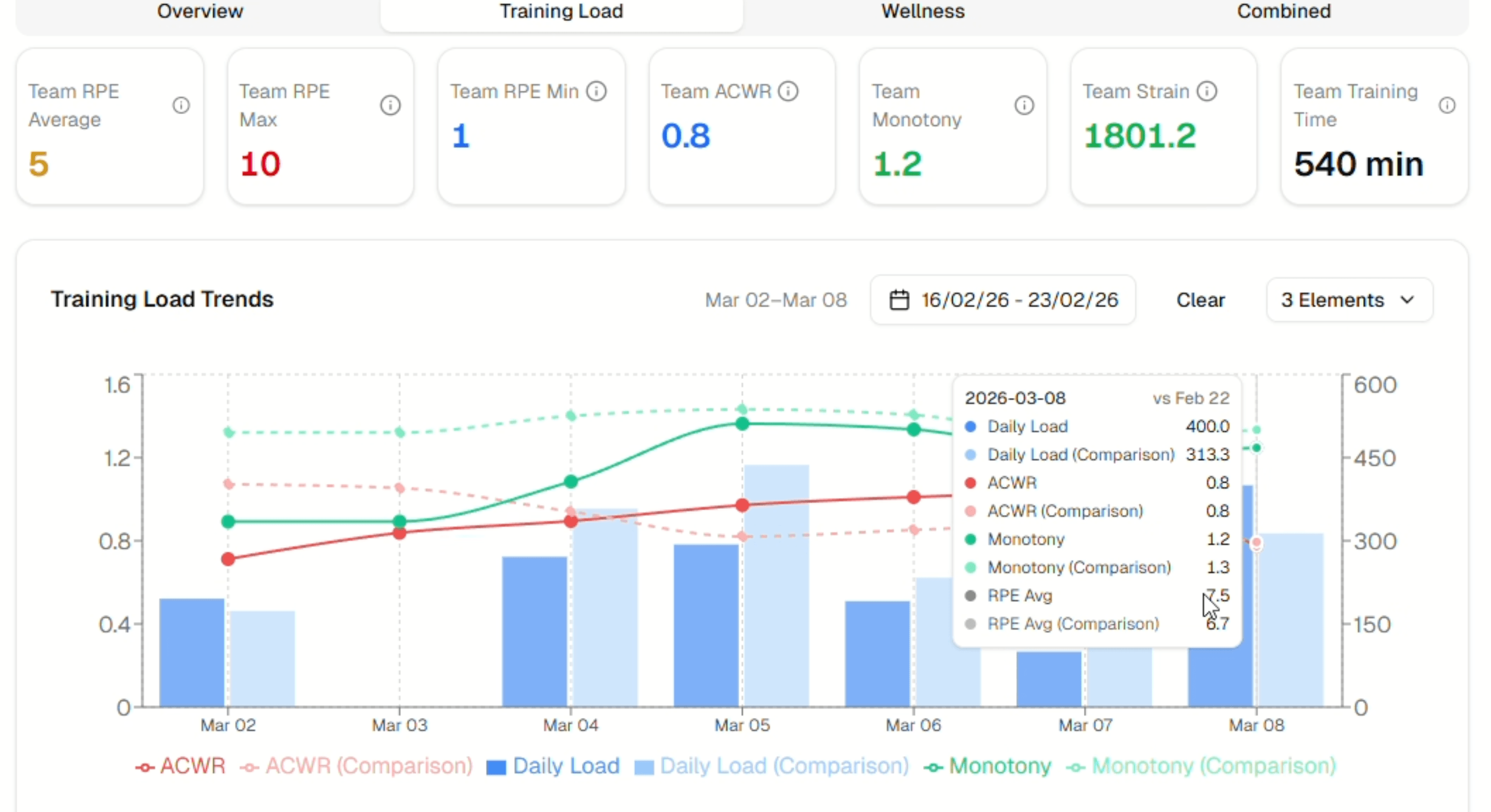
Microcycle comparison means placing two or more structured training weeks side by side so coaches can see how load, intensity, and recovery are changing.
Microcycle
The smallest structured unit of a training plan, usually one week.
Example: A football microcycle may run from match day recovery through the next match.
Why it matters
Core metrics
Compare the five signals that explain the weekly load story
These metrics work best as a set. Each one answers a different planning question before the next session.
| Metric | What it shows | Why compare it |
|---|---|---|
| ACWR | Acute load versus chronic baseline. | Shows whether recent load is ahead of or behind what the athlete is prepared for. |
| Monotony | How much daily load varies inside the week. | Highlights repetitive weeks where every day stresses the athlete similarly. |
| Daily load | RPE multiplied by duration. | Lets staff compare similar days across weeks, such as Monday versus Monday. |
| Strain | Weekly load multiplied by monotony. | Combines total stress and lack of variation into one accumulated-stress signal. |
| sRPE | How hard the athlete perceived the session. | Shows whether athlete response matches the coach's planned intensity. |
Read them together
- ACWR can flag a spike, but context decides the response.
- Monotony explains whether load variety is too low.
- Daily load shows which sessions are drifting.
- Strain catches cumulative stress better than total load alone.
- sRPE trends reveal fatigue or mismatch between plan and reality.
Coach takeaway
Sport examples
Use comparison to change the next session before the issue grows
The same comparison habit applies across competition weeks, pre-season blocks, and return periods.
Two matches in five days
If ACWR rises from 0.95 to 1.4 and strain is elevated, the next field session should likely be recovery-oriented rather than another loading day.
Common mistakes
Do not compare weeks as if context does not matter
Microcycle comparison is powerful because it adds context. It becomes misleading when staff ignore the structure of each week.
Comparing different week types
Acting on one metric
Waiting until something feels wrong
Hiding individual outliers
Implementation
Start with sRPE collection, then build the comparison habit
You do not need GPS hardware or a data analyst to compare microcycles. You need consistent internal-load collection and a review rhythm.
- 1
Collect sRPE after every session
Use RPE x duration as the internal-load value for each player.
- 2
Track daily load and weekly totals
At least four weeks of consistent collection makes comparison meaningful.
- 3
Calculate ACWR, monotony, and strain
Automate these calculations where possible so the workflow stays reliable.
- 4
Compare like-for-like microcycles
Competition weeks should be compared with competition weeks, not blindly against training-only blocks.
- 5
Review before the next session
Use comparison as a planning input, not just a retrospective report.
Fractall workflow
Athletes submit sRPE after each session in under a minute.
Fractall calculates ACWR, monotony, strain, daily load, and sRPE trends.
Coaches compare selected microcycles before adjusting the next session.
Compare microcycles without spreadsheet work
Use Fractall to automate internal-load metrics and see how the current week compares with previous training blocks.
See how coaches use Fractall week to week
Comparing microcycles is one Fractall workflow. See how clubs also run wellness check-ins, load reviews, and return-to-play calls.
FAQs
Microcycle comparison questions
Short answers for coaches turning weekly sRPE data into a planning workflow.
How many microcycles should I compare?
What is a safe ACWR range?
Can I compare without GPS?
How often should I review it?
Coach checklist
- Collect sRPE from every athlete after every session.
- Calculate daily load and track it consistently.
- Review ACWR, monotony, strain, daily load, and sRPE as a set.
- Compare like-for-like microcycles.
- Flag elevated strain across consecutive weeks.
- Use comparison before the next session, not after.
- Check individual outliers, not only team averages.
Related guides
Winter Break Training Plan for Football S&C Coaches
Winter break training plan for football: what two weeks off costs, the minimum to prescribe at home, and how to log it so January ACWR stays honest.
Two Games a Week: What Wellness Data Shows Before Match 2
Fractall data on football teams playing two games a week: on match morning, fatigue sits less than half as far above normal. How to read wellness between games.
ChatGPT and Claude for Strength and Conditioning Coaches
What an S&C coach can ask ChatGPT or Claude about squad load, wellness and injuries, and the privacy settings to change before any athlete data goes in.